



Reflection by: Alberto Bueno, T.O.R.
My dear Brothers and Sisters, peace and good! This was the greeting of Saint Francis to all he met. He desired that peace and goodness would be in the hearts and lives of everyone he encountered. This Tuesday, October 27th, marks the fortieth anniversary of the Spirit of Assisi. It was on this date in 1986 that Pope Saint John Paul II gathered the world’s religious leaders, not just of the various Christian denominations, but also all the leaders of the world’s other religions, Judaism, Islam, Hinduism, Buddhism, Shintoism, etc. This gathering took place in Assisi, in the Basilica of Our Lady of the Angels of the Portiuncula. In this extraordinary ecumenical and inter-religious prayer encounter it was Saint John Paul’s desire that together, all of them, each in their own way, pray for peace and reconciliation among peoples, nations, and faiths. This spirit of Assisi is like a spring of water flowing from living rock and irresistibly moving forward. The journey taken on the road to reconciliation and peace fills the heart with hope and enthusiasm. This was one of the great events which signal a turning point in human history. It literally caught worldwide attention as the event was televised everywhere. Saint John Paul and later Pope Benedict XVI, repeated the gathering, continuing the impetus for worldwide peace and harmony. Franciscans around the world are encouraged to commemorate this spirit, by offering prayers and actions to encourage and increase peace in hearts and lives. Let us ALL join in prayer and actions so that in our violent and war-torn world we may have peace, reconciliation, and harmony caring for one another and our common home, our Sister Mother Earth, so that God’s blessings be shared by all of God’s creation.
Queridos hermanos y hermanas, ¡paz y bien! Este fue el saludo de san Francisco a todos con quien se encontraba. Deseaba que la paz y la bondad habitaran en los corazones y las vidas de todos los que se cruzaran en su camino. Este martes, 27 de octubre, se conmemora el cuadragésimo aniversario del Espíritu de Asís. Fue en esta fecha, en 1986, que el Papa san Juan Pablo II reunió a los líderes religiosos del mundo, no solo de las diversas denominaciones cristianas, sino también de todas las demás religiones del mundo: judaísmo, islam, hinduismo, budismo, sintoísmo, etc. Este encuentro tuvo lugar en Asís, en la Basílica de Nuestra Señora Reina de los Ángeles de la Porciúncula. En este extraordinario encuentro ecuménico e interreligioso de oración, san Juan Pablo II deseó que todos juntos, cada uno a su manera, oraran por la paz y la reconciliación entre los pueblos, las naciones y las religiones. Este espíritu de Asís es como un manantial que brota de una roca viva y avanza irresistiblemente. El camino emprendido hacia la reconciliación y la paz llena el corazón de esperanza y entusiasmo. Este fue uno de los grandes acontecimientos que marcaron un punto de inflexión en la historia de la humanidad. Captó la atención mundial, pues fue televisado en todas partes. San Juan Pablo II y más tarde el Papa Benedicto XVI, repitieron la reunión, continuando el impulso hacia la paz y la armonía mundial. Se anima a los franciscanos de todo el mundo a conmemorar este espíritu, ofreciendo oraciones y acciones para fomentar y aumentar la paz en los corazones y las vidas. Unámonos TODOS en oración y acciones para que en nuestro mundo violento y devastado por la guerra podamos tener paz, reconciliación y armonía, cuidándonos unos a otros y a nuestro hogar común, nuestra hermana Madre Tierra, para que las bendiciones de Dios sean compartidas por toda la creación de Dios.
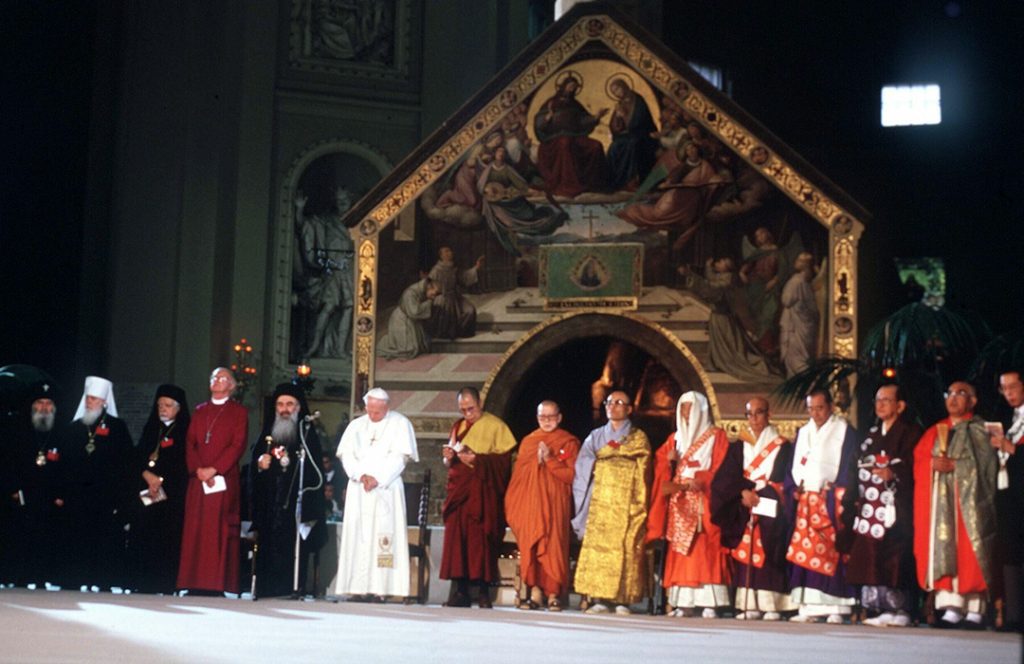
ITA/JEAN-PAUL II A ASSISE:JOURNEE MONDIALE DE LA PAIX 00137285